


2026 CLTI Distal Bypass Bootcamp was successfully held in Suzhou, China

On January 17–18, 2026, the CLTI Distal Bypass Surgery Bootcamp—initiated by the Vascular Surgery Branch of the Cross-Straits Medicine Exchange Association and organized by the Vascular Surgery team of Zhongshan Hospital, Fudan University—was successfully held at the Aesculap Academy in Suzhou. The 1.5-day course centered on “evidence-based guidance, solid theoretical foundations, and hands-on operative training,” focusing on chronic limb-threatening ischemia (CLTI), one of the most challenging clinical areas in contemporary vascular surgery.
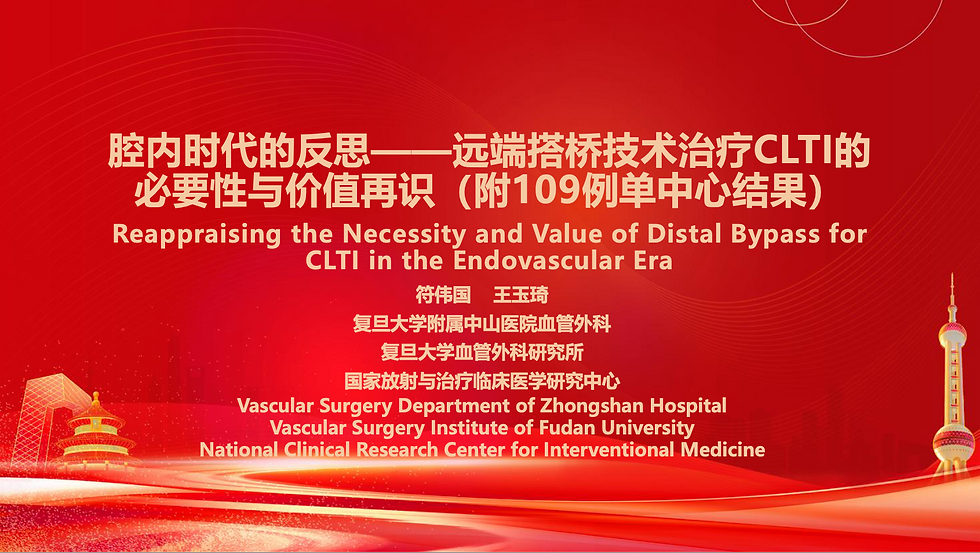
In an era where endovascular therapy has become the “default option” for CLTI, this Bootcamp directly addressed an unavoidable reality: the systematic loss of bypass surgery experience, which is emerging as a key limitation in the management of complex CLTI cases.
Despite being organized on a voluntary basis with self-paid registration fees and self-arranged accommodation and transportation, the course attracted 44 physicians from vascular surgery centers across China, highlighting the strong demand and proactive commitment within the field for high-quality, standardized training in bypass surgery.
“Preserving the professional capability to perform lower-limb bypass reconstruction in a rational, safe, and effective manner is one of the major challenges facing the vascular surgery community.”

From Workshop to Bootcamp
The so-called Bootcamp model is defined as a short-term, high-intensity, hands-on–centered, structured training program for vascular surgeons. The entire program is built around the complete competency framework of distal bypass surgery.
In today’s era of widespread endovascular therapy, distal bypass is not a technique “against the tide,” but rather a definitive pathway reserved for the most complex and challenging CLTI patients.
This CLTI Distal Bypass Surgery Bootcamp was not merely a technical training course, but also a clear statement of intent: complex surgical capabilities do not return naturally—they can only be cultivated systematically and deliberately.
This philosophy may well represent a key starting point for the high-quality development of vascular surgery in China.

Comments